




Knowledge Graphs: Enterprise Intelligence's Best-Kept Secret
Google uses one. Amazon uses one. Meta uses one. But most Latin American companies have never heard the term "Knowledge Graph." That's about to change.
The Problem with Databases
Relational databases solved the problem of storing data. But storing data and capturing knowledge are two radically different things. A table can tell you how many orders you have. It can't tell you why the approval process takes three extra days when the purchasing director is traveling.
Your company knows it HAS 47 processes. But it doesn't know HOW they connect to each other, WHO depends on which, or WHAT happens when one fails. That knowledge exists — but it lives in people's heads, in unindexed emails, in PowerPoint presentations no one updates.
What Is a Knowledge Graph
A Knowledge Graph is a structured representation of entities and their relationships. Nodes representing concepts — processes, people, products, suppliers — connected by typed relationships with properties. Like a map of everything your company knows and how it connects.
The difference from a traditional database isn't technical — it's conceptual. A database stores facts. A Knowledge Graph captures context, relationships, and meaning. It enables reasoning about information, not just retrieving it.
Imagine being able to ask: "What processes are affected if supplier X delays a delivery?" and getting an answer in seconds. Not a list of records — a navigable causality chain showing exactly where the risk lies.
"A Knowledge Graph isn't a database — it's your company's institutional memory, organized to be queried by humans and machines."
Three Layers of Intelligence
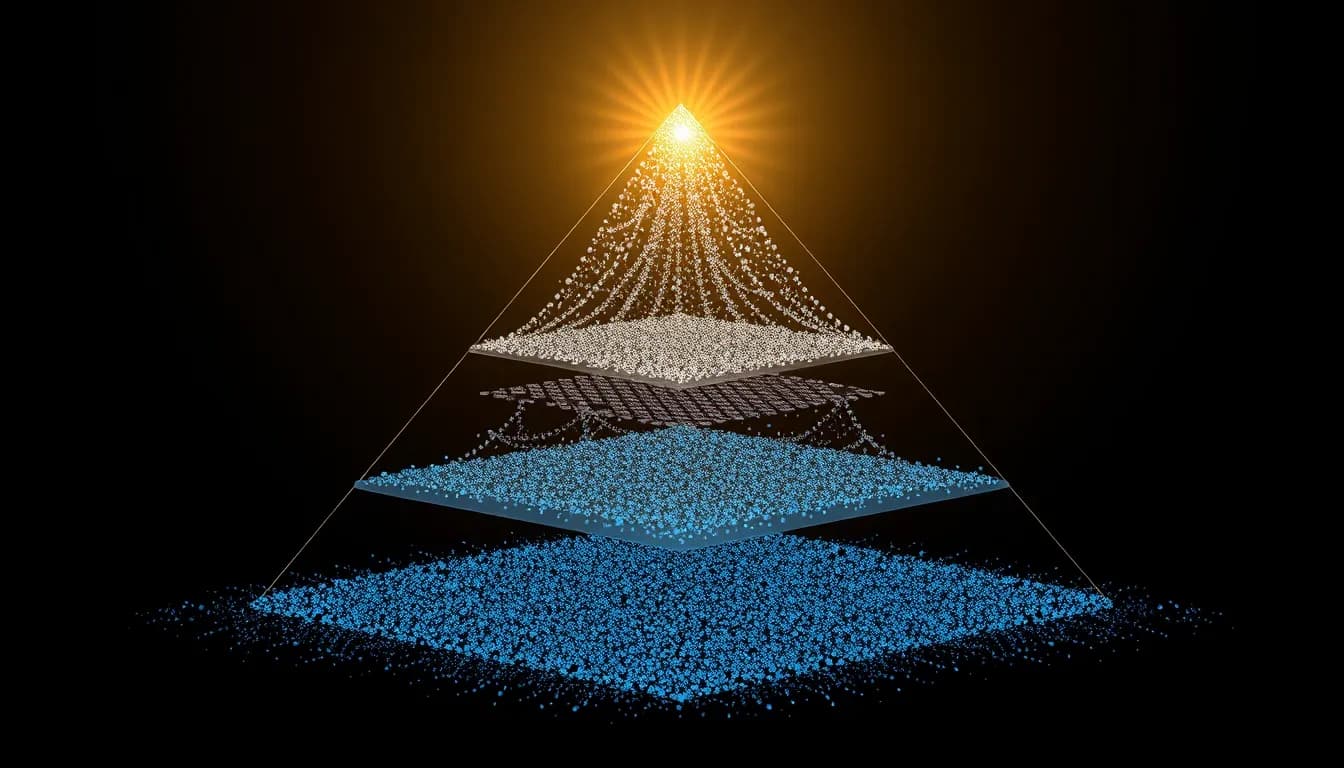
Storing data isn't enough. You need to transform it into verifiable knowledge. The architecture we've developed at Neocortex operates in three layers:
Everything your company produces — documents, transactions, logs, emails. Unfiltered, unprocessed. The raw material.
Data is transformed into vector representations that capture meaning. Enables semantic search and similarity detection.
Extracted entities, mapped relationships, verified ontology. The complete Knowledge Graph, queryable in natural language.
Knowledge Graphs in Action
An industrial sector client started the process with 4,000 internal documents: process manuals, supplier contracts, audit reports, quality policies. The knowledge was scattered, outdated, and accessible only to those who knew where to look.
In 72 hours, GraphWise processed the documents, extracted key entities — processes, actors, resources, constraints — and mapped the relationships between them. The result was a queryable Knowledge Graph where there had been a chaotic shared drive.
From weeks of consulting to answer a complex operational question, to hours of automatic processing. The knowledge didn't change — the ability to access it did.
The Future of Enterprise Knowledge
Knowledge Graphs aren't an emerging technology — they're the invisible infrastructure of the world's smartest companies. Google uses them to improve search relevance. Amazon uses them to model relationships between products and customers. LinkedIn uses them to map the global labor market.
In 5 years, every competitive company will have a Knowledge Graph. The question isn't if — it's when you start building yours. Those who start today will have five years of advantage in structured institutional knowledge. That advantage isn't easily recovered.
Published by the Neocortex team — 2026.02.01
Build Your Knowledge Graph
GraphWise automatically extracts, structures, and connects your organization's knowledge.
Services
Industries
- Manufacturing
- Retail
- Agribusiness
- Telecommunications
Contact
- info@neocortexlabs.com
- Santiago de Cali, Colombia